
The United States Constitution guarantees fundamental rights to all citizens, forming the basis of our democracy. Since 2024, various news reports and advocacy groups have documented ongoing threats to these rights under the Trump Administration.
Article I establishes the powers of Congress and upholds its responsibility to make laws and oversee the executive branch. The Trump Administration refused to comply with congressional subpoenas related to investigations on federal agency activities, thereby undermining Congress’s oversight authority. Furthermore, in October 2025, a bipartisan group of lawmakers alleged that the administration pressured federal agencies to ignore appropriations instructions passed by Congress, raising concerns about the separation of powers and the government’s duty to follow the law.
Article III establishes the judicial branch and ensures the independence of the courts. In April 2024, critics raised alarms when the Trump Administration reportedly attempted to influence ongoing federal court cases by making public statements against judges presiding over cases involving administration policies. Additionally, there were reports that the administration considered withholding funding for federal judiciary offices in response to rulings it disagreed with, actions viewed as encroaching on judicial independence and undermining the separation of powers. In the Abrego Garcia case, ICE agents and DOJ lawyers ignored a judicial order preventing transport of Garcia and other detainees to El Slavador.
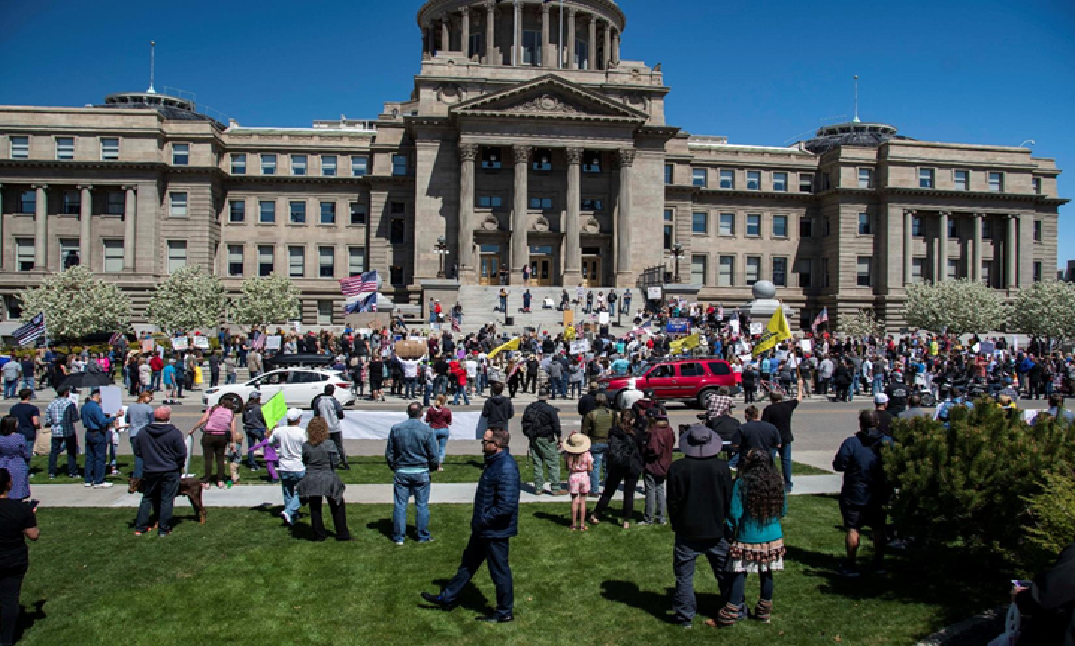
The First Amendment upholds freedom of speech and the press. News organizations reported that journalists were denied access to White House and Pentagon press briefings following their critical coverage of Administration policies. Furthermore, peaceful protestors in Washington, D.C. were met with increased restrictions and permit denials, raising concerns about the right to assemble. In Chicago and Minneapolis, protestors, clergy, and children, exercising their first amendment rights, were struck by non-lethal munitions and pepper spray during peaceful protests.
The Fourth Amendment protects people from unreasonable searches and seizures. In January 2025, the Department of Homeland Security (DHS) and Immigration and Customs Enforcement (ICE) faced public outcry after conducting several raids in California and Texas without presenting warrants or probable cause. These operations reportedly involved detaining individuals for extended periods and seizing personal property, leading to lawsuits from civil liberties organizations.
In July 2025, DHS was accused of monitoring activists’ cell phone communications during protests in Phoenix, Arizona, without proper judicial authorization. In October, 2025, FBI and DHS law enforcement agents executed a raid at the La Catedral Rodeo in Wilder, Idaho. Even though the warrant was for people suspected of gambling at the rodeo, almost everyone present, including U.S. citizens and children, were detained for a significant amount of time, even though they were not named in the judicial warrant.
Due process and equal protection are central to the Fifth and Fourteenth Amendments. New fast-track deportation procedures for migrant families were implemented, and advocacy groups argued that these changes denied many individuals fair hearings and legal representation. Reports also highlighted that certain groups faced harsher treatment based on nationality, raising equal protection concerns.
ICE was reported to have expelled dozens of asylum seekers without allowing access to legal counsel or an opportunity to appeal their cases. These actions drew criticism from legal organizations, who stated that the expedited procedures undermined due process guarantees.
News reports and federal court rulings have raised concerns that certain immigration enforcement practices of the Trump administration have interfered with the Sixth Amendment right to the assistance of counsel. Attorneys and detainees have alleged that during large-scale immigration operations, particularly in Minnesota and other states, individuals in federal custody were denied timely or confidential access to lawyers, including instances where attorneys were physically prevented from meeting clients or where legal calls were restricted or monitored. In February and March 2026, federal judges— including a judge appointed by President Trump—rebuked the administration for conditions that “all but extinguished” detainees’ access to counsel, ordering the Department of Homeland Security and Immigration and Customs Enforcement to restore attorney visitation and unmonitored legal communication. Courts emphasized that meaningful access to counsel is essential to due process and that logistical challenges cannot justify constitutional violations. Similar allegations have been reported at detention facilities in Los Angeles and New York, where judges found that restrictions on attorney access continued despite prior court orders.
The Eighth Amendment prohibits cruel and unusual punishment. Investigations revealed that detainees in federal immigration facilities faced deteriorating conditions, including lack of medical care and overcrowding. Journalists documented numerous cases of physical and psychological distress, calling attention to the possible violation of constitutional protections.
In October 2025, further reports surfaced that ICE-run facilities in Louisiana and Mississippi subjected detainees to solitary confinement for weeks without proper review. Human rights groups highlighted the cases of individuals suffering severe mental health effects as a result, claiming these conditions constituted cruel and unusual punishment under the Eighth Amendment.
Critics, civil-rights organizations, and legal scholars have argued that several actions by the current Trump administration implicate the Ninth Amendment, which affirms that rights not explicitly listed in the Constitution are nonetheless retained by the people. Legal commentators have warned that expanded federal surveillance authorities and data-collection practices under the administration threaten unenumerated privacy interests that, while not named in the Constitution, have historically been linked to the Ninth Amendment’s protection of retained rights. While courts often analyze these disputes under other constitutional provisions, the Ninth Amendment is frequently cited in litigation and scholarship as a constitutional safeguard against governmental efforts to narrow fundamental freedoms solely because they are not expressly enumerated.
Since 2024, renewed debate has focused on Section 702 of the Foreign Intelligence Surveillance Act (FISA) and its impact on constitutional rights, especially the Fourth Amendment’s protection against unreasonable searches and seizures. In 2025 and 2026, civil liberties groups and investigative journalists reported that the FBI and other agencies used Section 702 databases to conduct warrantless searches of Americans’ communications, including those of activists, journalists, and political figures, without individualized judicial approval. Declassified court opinions from the Foreign Intelligence Surveillance Court revealed persistent compliance failures, including improper querying of protestors’ communications during demonstrations in Phoenix, Arizona, and the monitoring of cell phone data without proper judicial authorization. Legal experts and advocacy organizations argue that these practices violate the Fourth Amendment and threaten privacy rights, as Section 702’s broad surveillance powers allow “backdoor searches” of Americans’ data collected incidentally during foreign intelligence operations.
Idaho’s congressional delegation took a strong stand against the government actions at Ruby Ridge by holding hearings and publicly calling for reforms; as Idahoans we demand they take a similar stand now.